Home Decor
How to Choose the Right Rug Size for Every Room: A UK Measurement Guide
The rug arrives, you unroll it, and something is off. Nine times out of ten the rug isn't the problem — it's the size, or where it sits in relation to the furniture. Getting this right costs nothing but a tape measure, a roll of masking tape and ten minutes on your hands and knees. Get it wrong and no amount of styling will disguise it.
Measure the Room Before You Fall in Love With a Rug
Start with the clear floor area, not the room's overall dimensions. Skirting boards, radiators, chimney breasts and fitted cupboards all eat into the space a rug can actually occupy. Measure the largest uninterrupted rectangle of floor you have.
Jot down four things before you look at a single rug:
- The full width and length of the room in centimetres.
- Where the doorways are, and which way the doors swing.
- Anything fixed that a rug would have to avoid — hearths, radiators, built-in shelving.
- The footprint of your main furniture, plus any space it needs to function (a chair pulling out, a wardrobe door opening).
Then do the trick that saves more returns than any other: lay low-tack masking tape on the floor in the exact rectangle or circle you're considering. Live with it for a day. Walk around it, sit on the sofa, pull a chair out. If the outline feels cramped, the rug will too.
Furniture should sit on a rug, not balance on the edge of one.
Living Rooms: Anchor the Seating
The usual advice is that at least the front legs of your sofa and armchairs should sit on the rug, and ideally all four. That single rule eliminates most of the mistakes people make in sitting rooms.
As a guide, the rug should extend roughly 15–30 cm beyond each end of the sofa. Anything less and it looks like a bath mat that has wandered into the wrong room. For a standard three-seater with two armchairs arranged around a coffee table, 200 x 290 cm is the workhorse size — big enough to hold the whole arrangement, and still comfortable in a typical semi-detached living room.
Sizing by arrangement
- Small sitting room, sofa plus one chair: 160 x 230 cm, positioned so the front legs sit on the rug.
- Three-seater, two armchairs, coffee table: 200 x 290 cm.
- Open-plan space: 240 x 340 cm, or two smaller rugs used to define separate zones.
In open-plan rooms, leave at least 30–45 cm of bare floor between the edge of one rug and the start of the next zone. That gap does the same job as a wall — it tells the eye where one area ends and another begins.
Bedrooms: Think Wider, Not Longer
In a bedroom, the rug is a landing strip. You want somewhere warm to put your feet when you get out of bed, extending 50–60 cm either side of the mattress.
Double and king beds
A UK double is 135 x 190 cm; a king is 150 x 200 cm. If you want the rug under the bed rather than beside it, run it under the bottom two-thirds so a generous section shows at the sides and foot. For a double, 160 x 230 cm laid across the foot of the bed works well in a smaller room. To go properly under the bed with room on both sides, you need 200 x 290 cm or 240 x 340 cm.
Single beds and children's rooms
A single bed is 90 x 190 cm. A 120 x 170 cm rug alongside it, or a 160 x 230 cm turned sideways and tucked under the lower half, gives plenty of soft landing space without swamping the room. Two small rugs either side of the bed is a neat solution if the floor is narrow — and easier to keep clean.
Dining Rooms: Let the Chairs Decide
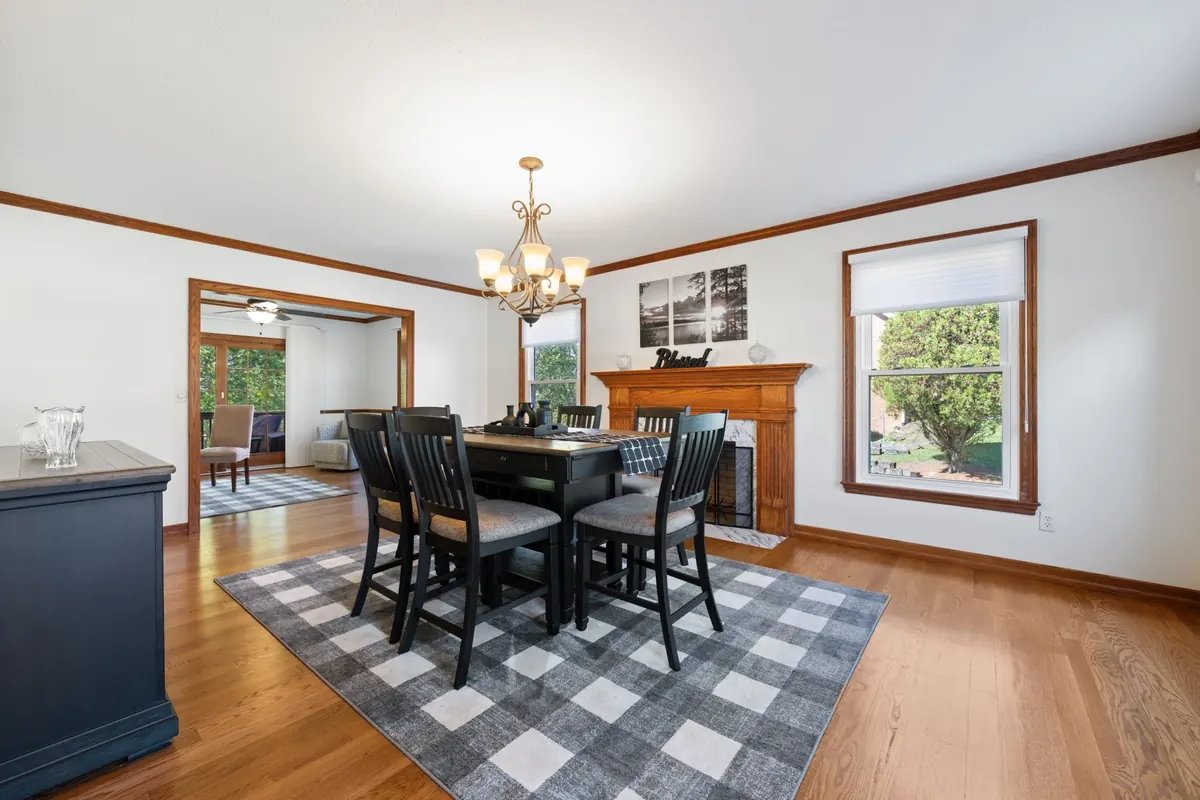
Dining rugs are governed by one number: how far a chair travels when someone stands up. As a rule, allow 60–70 cm of rug beyond every edge of the table, so all four chair legs stay on the rug when a chair is pulled out.
That sounds generous until you do the maths. A six-seat table measuring roughly 180 x 90 cm needs a rug of around 300 x 210 cm. In practice, a 200 x 290 cm rug is the sensible minimum for four to six people; a 160 x 230 cm simply won't hold the chairs. For a small four-seat table around 120 x 80 cm, a 200 x 290 cm rug gives comfortable clearance.
Round tables work best with round rugs. Take the table's diameter and add roughly 120 cm to get the rug diameter — a 120 cm round table suits a 180 cm round rug. Choose a flatweave or low-pile rug here: chairs glide rather than catch, and dropped crumbs come up with a quick vacuum.
Hallways and Runners: Width Matters More Than Length
Hallways are where sizing goes wrong most often, because a runner that's 5 cm too wide looks like a mistake and feels like one underfoot. Measure the narrowest point of the hall — radiator valves and door frames included — then leave 10–15 cm of bare floor visible on each side.
Common runner sizes are 66 x 200 cm, 80 x 240 cm and 80 x 300 cm. As a general guide, a runner needs a hallway at least 90 cm wide to sit comfortably. Finish the runner short of the front door so the door can swing over bare floor — rugs and door bottoms are a poor combination, and a rug that catches every time you come home quickly becomes a nuisance.
Common UK Rug Sizes and What They Suit
- 60 x 110 cm — bedside, kitchen sink, small doorway.
- 80 x 150 cm — beside a single bed, in front of a fireplace, tight hallway.
- 120 x 170 cm — reading nook, single bed landing, small bathroom.
- 160 x 230 cm — the most versatile size; smaller living rooms, foot of a double bed.
- 200 x 290 cm — main living rooms, under a four to six-seat dining table, larger bedrooms.
- 240 x 340 cm — open-plan living, formal dining rooms, under a king or super king bed.
- Runners: 66 x 200 cm, 80 x 240 cm, 80 x 300 cm.
- Round: 120 cm, 150 cm and 180 cm diameters.
Note that many listings still quote imperial sizes. A "5 x 7" rug is roughly 152 x 213 cm, which is why a 160 x 230 cm often looks slightly more generous than expected. Check the metric measurement, not the label.
Tape It Out, Then Buy
Before you order, run through this once more:
- Tape the exact size on the floor and leave it there for a day.
- Pull out every chair, open every door, and check the rug clears curtains and radiators.
- Photograph the taped outline from the doorway — it's a surprisingly honest view.
- Add a non-slip underlay. It stops rugs creeping on wood and tile, and it makes a thin rug feel far more luxurious.
- Check pile height against door clearances, especially in hallways and bedrooms.
If you're torn between two sizes, take the larger one. A rug that's slightly too big always looks better than one that's slightly too small — furniture can sit comfortably on a generous rug, but nothing rescues a mean one. Measure twice, tape it out, and the room will look finished the moment you unroll it.
Photo: Hoang Editor / Pexels
Related Articles